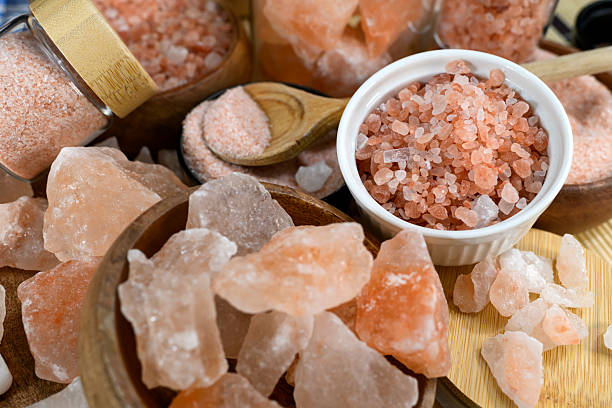
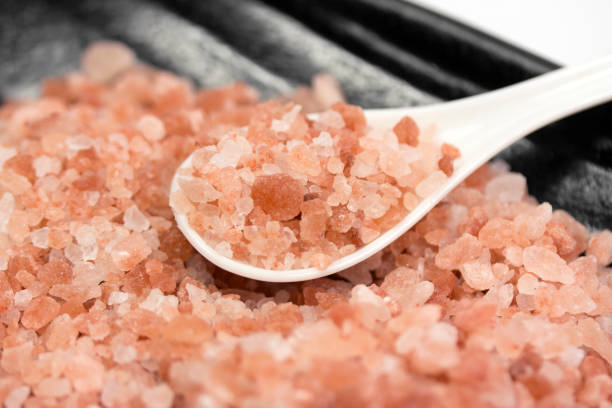
Salt has long been essential to human life not just for taste, but for survival. Yet, not all salt is created equal. One type stands out for both its natural purity and growing popularity: Himalayan pink salt. Found in gourmet kitchens and wellness routines alike, it’s cherished not only for its delicate flavor but also for its rich profile of Himalayan salt minerals. But a common question arises: how many trace minerals are in Himalayan pink salt, and what makes them so special?
In this guide by Himalyan Food, we dive deep into the Himalayan salt minerals profile of this rosy salt, backed by science and natural geology.
What Makes Himalayan Salt Unique
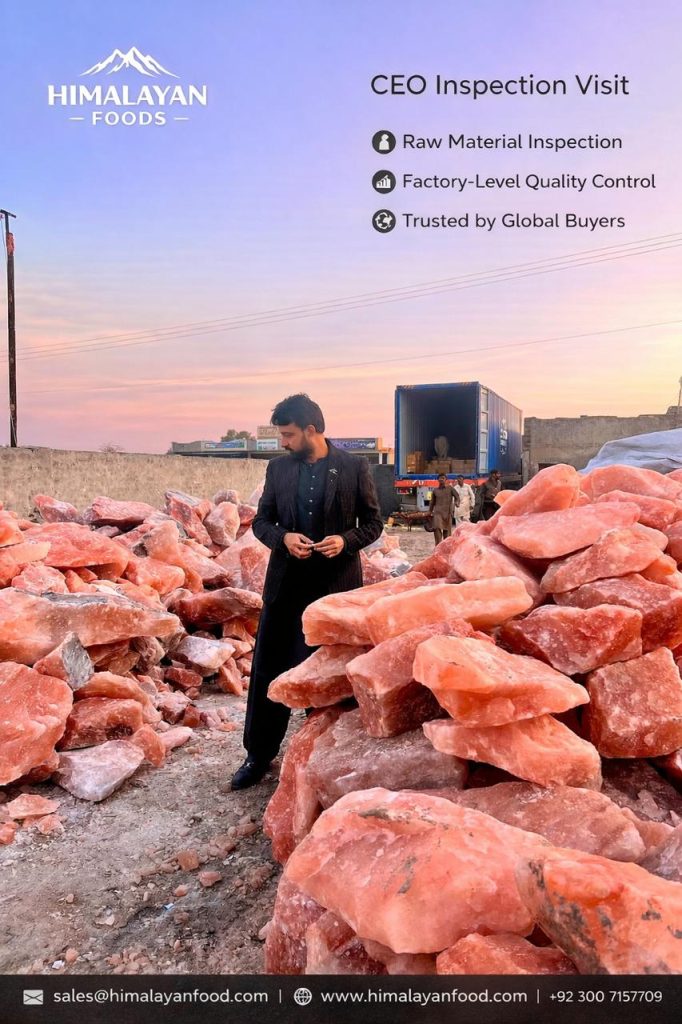
Himalayan pink salt is harvested from the ancient Khewra Salt Mine in Pakistan, formed over 250 million years ago from long-dried seabeds. Unlike modern refined salt, it remains untouched by pollutants and free from chemical processing. Its signature pink hue comes from over 80 Himalayan salt minerals including iron, magnesium, potassium, and calcium naturally embedded in the salt’s crystalline structure.
Unlike regular table salt, Himalayan salt is minimally refined, meaning its mineral content remains almost fully intact.
How Many Trace Minerals Are in Himalayan Pink Salt?
The most popular claim is that Himalayan pink salt contains 84 trace minerals. While this number often varies depending on the source and testing methods, scientific analysis confirms that the salt contains dozens of naturally occurring elements.
These include:
- Sodium chloride (around 95–98%)
- Potassium
- Magnesium
- Calcium
- Iron (which gives it the pink hue)
List of Found Himalayan salt minerals
Here’s a summarized list of found Himalayan salt minerals, based on lab tests and geological studies:
- Sodium (Na)
- Chloride (Cl)
- Calcium (Ca)
- Magnesium (Mg)
- Potassium (K)
- Iron (Fe)
- Zinc (Zn)
- Phosphorus (P)
- Iodine (I)
- Copper (Cu)
- Selenium (Se)
- Manganese (Mn)
- Fluoride (F)
- Sulfate (SO4)
- Chromium (Cr)
- Molybdenum (Mo)
- Boron (B)
- Strontium (Sr)
- Lithium (Li)
This list is not exhaustive, but it demonstrates the natural complexity of Himalayan pink salt.
Himalayan salt minerals Breakdown Chart
| Mineral | Amount (ppm) | Benefit |
|---|---|---|
| Sodium | ~380,000 | Regulates fluid balance |
| Chloride | ~590,000 | Maintains pH and digestion |
| Calcium | 4,000 | Bone strength |
| Magnesium | 1,500 | Nerve and muscle support |
| Potassium | 3,500 | Electrolyte balance |
| Iron | 38 | Oxygen transport (red blood cells) |
| Zinc | 2.5 | Immune system health |
| Iodine (Trace) | <1 | Thyroid function |
| Copper | 0.6 | Connective tissue maintenance |
Comparison of Himalayan Salt Minerals vs Table Salt
| Feature | Himalayan Salt | Table Salt |
|---|---|---|
| Processing | Minimal | Highly processed |
| Additives | None | Often includes anti caking agents and iodine |
| Mineral Content | Up to 84 trace minerals | Mostly sodium chloride |
| Flavor Profile | Earthy, subtle, complex | Sharp and salty |
| Color | Pink | White |
The comparison of Himalayan salt minerals vs table salt highlights Himalayan salt as the more natural option, especially for health conscious consumers.
The Truth Behind “84 Minerals” Claim
So, does Himalayan salt really have 84 minerals?
Technically, yes. Lab studies suggest that 84 different elements exist in microscopic amounts. However, most of these are present in trace quantities and do not significantly contribute to daily nutritional needs.
Many of the 84 are ultratrace elements like gold, silver, or radium, found in minuscule, harmless levels.
Still, the presence of even small amounts of essential nutrients like iron, magnesium, and calcium adds to its appeal.
Health Significance of Trace Minerals
Even in tiny amounts, trace minerals play a vital role in supporting:
- Metabolism
- Nerve and muscle function
- Bone health
- Hormonal balance
- Immune defense
While Himalayan salt mineral content is not a replacement for a multivitamin, it enhances your salt intake with a broader spectrum of benefits compared to ordinary table salt.
How to Use Himalayan Salt in Daily Life
Himalayan salt isn’t just for cooking. Here are some creative and healthful uses:
- Cooking and seasoning (use in grinders or as flakes)
- Sole water (for natural hydration)
- Salt lamps (for ambiance and air purification)
- Bath salt (for muscle relaxation)
- Salt scrubs (for exfoliation)
Himalyan Food offers premium Himalayan salt products that retain the natural mineral richness in every grain. The next time you sprinkle pink salt on your meal, know you’re adding more than just flavor you’re seasoning with Himalayan salt minerals, ancient nutrients that have stood the test of time. Whether you’re curious about how many trace minerals are in Himalayan pink salt or want a healthier alternative to table salt, Himalyan Food has your needs covered with authentic, mineral-rich Himalayan salt products.
FAQs
How many trace minerals are in Himalayan pink salt?
Up to 84 trace minerals, including magnesium, calcium, potassium, and iron.
Does Himalayan salt really have 84 minerals?
Yes, although many are in extremely small (trace) amounts, their presence is scientifically confirmed.
What is the mineral content difference between Himalayan salt and table salt?
Himalayan salt has a broader mineral profile; table salt is mostly refined sodium chloride with additives.
Can Himalayan salt provide daily mineral needs?
No, it contributes minor amounts of minerals and should complement a balanced diet.
Is Himalayan salt safe for daily use?
Yes, in moderation. It’s natural and unprocessed, with no chemical additives.